
Installeer de app
Hoe de app installeren op iOS
Volg de onderstaande video samen om te zien hoe u onze site kunt installeren als een web-app op uw startscherm.
Notitie: Deze functie is mogelijk niet beschikbaar in sommige browsers.

Je gebruikt een verouderde webbrowser. Het kan mogelijk deze of andere websites niet correct weergeven.
Het is raadzaam om je webbrowser te upgraden of een alternatieve webbrowser te gebruiken.
Het is raadzaam om je webbrowser te upgraden of een alternatieve webbrowser te gebruiken.
Sticky Klimaat(verdragen) Topic
- Topic starter Derksen
- Startdatum
- Recente activiteit Recente activiteit:
- Reacties 3.467
- Weergaven 139.987
- Volgers 45

- Lid sinds
- 16 mei 2006
- Berichten
- 59.513
- Waardering
- 22.094
 En dan met die halve mong**l op de foto staan.
- Lid sinds
- 16 mei 2006
- Berichten
- 59.513
- Waardering
- 22.094

- Lid sinds
- 24 aug 2009
- Berichten
- 21.667
- Waardering
- 12.184

Greta Thunberg and the plot to forge a climate warrior
Greta Thunberg’s great American adventure has begun. Last Wednesday, she set sail from Plymouth like the pilgrims did, her Mayflower a zero-carbon but very expensive racing yacht; her goal not religious liberty but a camera-rich turn at the UN’s climate change conference in New York. Meanwhile, on d
 www.thetimes.co.uk
The teenage activist Greta Thunberg wants nothing more than to change the world. The shadowy cabal behind her has other goals
Dominic Green
Greta Thunberg’s great American adventure has begun. Last Wednesday, she set sail from Plymouth like the pilgrims did, her Mayflower a zero-carbon but very expensive racing yacht; her goal not religious liberty but a camera-rich turn at the UN’s climate change conference in New York.
Meanwhile, on dry land, GQ magazine recently appointed Greta its “game changer of the year”, with a cover image in which the teenager, whether she realises it or not, strikes a stern, finger-pointing pose reminiscent of Lord Kitchener’s First World War recruiting poster and tells Britain’s feckless carbon-emitters: “To do your best is no longer good enough.”
Greta is just an ordinary 16-year-old Swedish schoolgirl whose fiery visions have convinced the parliaments of Britain and Ireland to declare a “climate emergency”. Her parents, Svante Thunberg and Malena Ernman, an actor and opera singer respectively, are just an ordinary pair of parent-managers who want to save the planet. Query their motives and you risk being accused of “climate denial”, or of bullying a vulnerable child with Asperger’s syndrome.
However, the Greta phenomenon has also involved green lobbyists, PR hustlers, eco-academics and a think tank founded by a wealthy former minister in Sweden’s Social Democratic government with links to the country’s energy companies. These companies are preparing for the biggest bonanza of government contracts in history: the greening of the western economies. Greta, whether she and her parents know it or not, is the face of their political strategy.
The family’s story is that Greta launched a one-girl “school strike” at the Swedish parliament on the morning of August 20 last year. Ingmar Rentzhog, the founder of a social media platform, We Don’t Have Time, happened to be passing. Inspired, Rentzhog posted Greta’s photograph on his own Facebook page. By late afternoon, the newspaper Dagens Nyheter had Greta’s story and face on its website.
But this isn’t the full story. In emails, Rentzhog told me that he “met Greta for the first time” at the parliament and “did not know Greta or Greta’s parents” before then. Yet in the same emails, the media entrepreneur admitted to having met Greta’s mother “3-4 months before everything started” — in early May last year, when he and Malena shared a stage at a Stockholm conference called the Climate Parliament.
Nor did Rentzhog stumble on Greta’s protest by accident. He now admits to having been informed “the week before [via] a mailing list from a climate activist” named Bo Thoren.
Rebecca Weidmo Uvell, an independent journalist, has obtained an earlier email that reveals Thoren, the leader of a group called Fossil Free Dalsland, was searching for fresh green faces.
In February last year, he invited a group of environmental activists, academics and politicians to plan “how we can involve and get help from young people to increase the pace of the transition to a sustainable society”. In May that year, after Greta won second prize in an environmental writing competition run by the newspaper Svenska Dagbladet, Thoren approached all the competition winners with a plan for a “school strike” modelled on the walkouts by pupils after the shootings at a high school in Parkland, Florida, a few months before.
“But no one was interested,” Greta’s mother claimed, “so Greta decided to do it for herself.”
Fortunately, Greta’s decision coincided with the publication of Scenes from the Heart, her parents’ memoir of how working to save the planet had saved their family. Unfortunately, Malena omitted to tell her publisher that Rentzhog had commandeered Greta’s stunt.
“We had a problem,” recalled Malena’s editor, Jonas Axelsson. “Journalists asked if it was promotion for the book. It wasn’t at all. It was a nightmare.”
It was, however, a dream for Rentzhog. He combined Thoren’s plan, Malena’s musical fame, Greta’s uncanny charisma and his social media platform’s mailing list. And that turned Greta into a viral celebrity.
“I have not invented Greta,” Rentzhog insisted, “but I helped to spread her action to an international audience.”
Trained by former US vice-president Al Gore’s environmental group, the Climate Reality Project, Rentzhog set up We Don’t Have Time in late 2017 to “hold leaders and companies accountable for climate change” by leveraging “the power of social media”.
In May last year, Rentzhog became the chairman and Olsson a board member of a think tank called Global Utmaning (Global Challenge). Its founder, Kristina Persson, is an heir to an industrial fortune.
So, when Greta met Rentzhog, he was the salaried chairman of a private think tank owned by a former Social Democrat minister with a background in the energy sector. His board was stacked with powerful sectoral interests, including career Social Democrat politicians, union leaders, and lobbyists with links to Brussels.
Greta and her parents probably did not know this — and Rentzhog seems to have wanted to keep it that way. On September 2 last year, just after Rentzhog claimed to have stumbled on Greta protesting outside parliament, the Dagens Nyheter newspaper ran a long opinion piece on the need to force the greening of the global economy by “bottom-up” action against national governments.
Greta’s mother was one of nine signatories, as were Persson and three other Global Challenge board members, though they cited other affiliations. Only Rentzhog admitted that he was associated with Global Challenge.
An English edition of the article identifies Rentzhog and Wijkman as its authors. Rentzhog claims that “many of us involved in Global Challenge were also involved” in writing it. He admitted to me by email that he showed Malena “the article and the other signatures, but not their titles for Global Challenge”.
Greta’s father, Svante, who now devotes himself to managing his daughter’s career, declined requests for an interview and refused to respond to a detailed list of written questions about Rentzhog and Global Challenge. Instead, he issued a three-paragraph statement through an intermediary, saying that “neither I nor Greta feel qualified to answer” questions about Rentzhog’s business connections and when the family might have known about them.
Svante also claims that “we have never worked with” Rentzhog’s social media platform or Global Challenge. Yet Greta served on the We Don’t Have Time advisory board between last November and January this year, and Malena signed a letter with four Global Challenge board members. When I asked Rentzhog if he had introduced Greta and her parents to other Global Challenge board members, he replied: “I don’t know. Maybe I did, but if Svante says no, maybe it was not connected.”
Svante refuses to answer questions about whether he and Greta have met members of the Global Challenge board. But Wijkman remembers.
Wijkman used to lead the Club of Rome, whose alarmist 1972 report, The Limits to Growth, has become a cornerstone of the “climate emergency” campaign. Last December, We Don’t Have Time and Global Challenge launched the Club of Rome’s latest vision of apocalypse, the Climate Emergency Plan. Greta, Rentzhog told me, was invited to the launch event, but was unable to attend as she was already booked to deliver a TED Talk.
The Climate Emergency Plan’s talking points are Greta’s talking points. “Around the year 2030, in 10 years, 252 days and 10 hours,” the Scandinavian Cassandra told British parliamentarians in April, “we will be in a position where we set off an irreversible chain reaction beyond human control that will most likely lead to the end of our civilisation as we know it.”
Wijkman sees Greta as vital to pushing the “climate emergency” strategy on Europe’s political class.
Has Rentzhog been essential to Greta’s rise? “Yes, yes,” said Wijkman, though he finds it hard to quantify to what degree. “I don’t know how much he’s been influential. I think that Greta and her father and mother are quite skilled.”
Svante claims his daughter “acts independently of any organisation or individual”.
In January, Rentzhog and We Don’t Have Time used Greta’s face and story in promotional materials for a new venture’s share issue. Rentzhog claimed the family knew, but Greta and her parents insisted they did not. They announced their association with Rentzhog was over — a curious statement, considering that Svante claims they had never associated with him in the first place.
Greta’s new press agent, Daniel Donner, works from the office of a Brussels lobby group, the European Climate Foundation. Still, We Don’t Have Time retweet Greta as if nothing has changed. In a way, nothing has.
For energy titans in Sweden, as elsewhere, saving the planet means government contracts to print the green stuff. Green energy lobbyists are using populist scare tactics and a children’s crusade to bypass elected representatives. But the destination is technocracy, not democracy; profit, not redistribution. Greta, a child of woke capitalism, is being used to ease the transition to green corporatism.
This is an edited version of a story that first appeared in Standpoint magazine
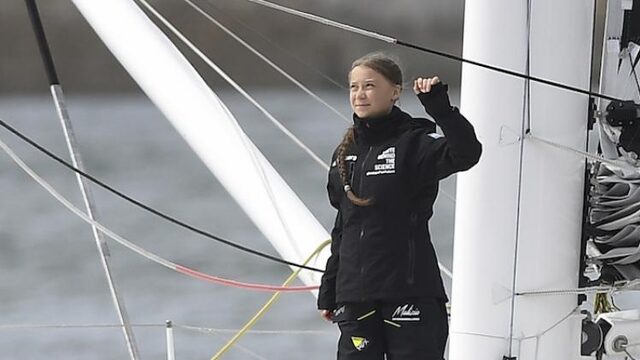
Hoe klimaatneutraal is de zeiltocht van 'klimaatmeisje' Greta Thunberg?
De Zweedse tiener Greta Thunberg zeilt klimaatneutraal naar New York. Maar lukt dat ook?
 www.nporadio1.nl
Of vertrouwen we dit verhaal niet omdat het van de NPO is?
- Lid sinds
- 24 aug 2009
- Berichten
- 21.667
- Waardering
- 12.184
Ik vertrouw alles wat in mijn denkbeeld past ongeacht de bron.Hoe klimaatneutraal is de zeiltocht van 'klimaatmeisje' Greta Thunberg?
De Zweedse tiener Greta Thunberg zeilt klimaatneutraal naar New York. Maar lukt dat ook?
Of vertrouwen we dit verhaal niet omdat het van de NPO is?

- Lid sinds
- 5 apr 2005
- Berichten
- 13.530
- Waardering
- 11.758
- Lengte
- 1m71
- Massa
- 86kg
- Vetpercentage
- 10%
- Lid sinds
- 5 apr 2005
- Berichten
- 13.530
- Waardering
- 11.758
- Lengte
- 1m71
- Massa
- 86kg
- Vetpercentage
- 10%
Wouw!!
 www.nu.nl
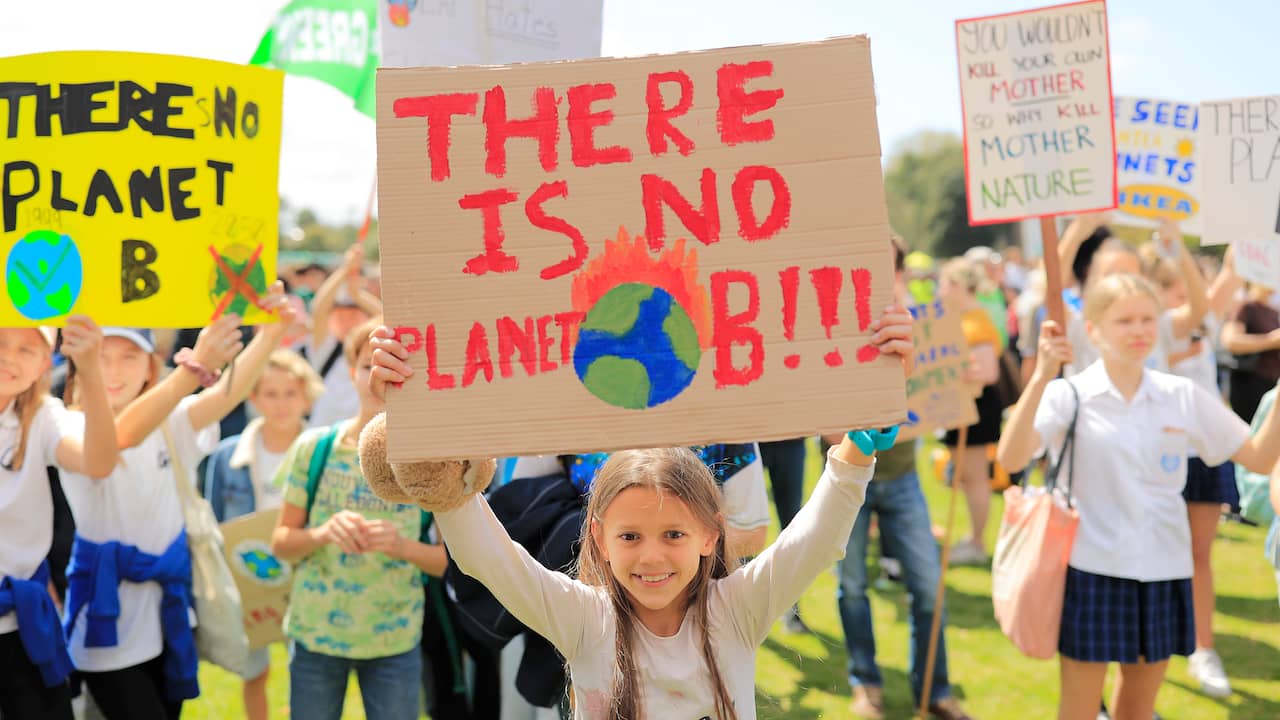
'Grootste reeks klimaatprotesten ooit' van start
Wereldwijd zijn vrijdag honderdduizenden scholieren en sympathisanten op de been voor het begin van de grootste reeks klimaatprotesten die ooit is gepland. In aanloop naar de klimaattop van de Verenigde Naties zijn er tot en met 27 september over de hele wereld bijna 5.000 evenementen gepland in...
www.nu.nl

Vieze jij
Huge Freak
- Lid sinds
- 3 okt 2012
- Berichten
- 7.080
- Waardering
- 9.714
- Lengte
- 1m92
- Massa
- 130kg
- Vetpercentage
- 14%
Vieze jij
Huge Freak
- Lid sinds
- 3 okt 2012
- Berichten
- 7.080
- Waardering
- 9.714
- Lengte
- 1m92
- Massa
- 130kg
- Vetpercentage
- 14%
Vieze jij
Huge Freak
- Lid sinds
- 3 okt 2012
- Berichten
- 7.080
- Waardering
- 9.714
- Lengte
- 1m92
- Massa
- 130kg
- Vetpercentage
- 14%
- Lid sinds
- 5 apr 2005
- Berichten
- 13.530
- Waardering
- 11.758
- Lengte
- 1m71
- Massa
- 86kg
- Vetpercentage
- 10%
- Lid sinds
- 5 apr 2005
- Berichten
- 13.530
- Waardering
- 11.758
- Lengte
- 1m71
- Massa
- 86kg
- Vetpercentage
- 10%


- Lid sinds
- 16 mei 2006
- Berichten
- 59.513
- Waardering
- 22.094

- Lid sinds
- 16 mei 2006
- Berichten
- 23.682
- Waardering
- 21.437
Vind er niet echt op lijken, zeggen heel andere dingen. Dit kind komt wel beter over. Overigens is er volgens mij elk jaar een bijeenkomst met kids bij dat evenement van de UN. Zo gek is dat dus niet dat grote zorgen worden aangestipt. Kennelijk al decennia omdat iedereen roept maar weinig doet.
- Lid sinds
- 16 mei 2006
- Berichten
- 59.513
- Waardering
- 22.094
- Lid sinds
- 16 mei 2006
- Berichten
- 23.682
- Waardering
- 21.437
- Lid sinds
- 16 mei 2006
- Berichten
- 23.682
- Waardering
- 21.437
Moest toch even glimlachen. Meerdere oorzaken. Dat ze kind is is juist, kritiek leveren vanuit dit perspectief wordt nauwelijks geaccepteerd. Maar tegelijkertijd praat ze over zaken mee en neemt ze de wereld de maat en worden we geacht te luisteren, dat dan weer wel. Dit spotje is wel grappig, maar doet onbewust eraan mee.
- Lid sinds
- 16 mei 2006
- Berichten
- 59.513
- Waardering
- 22.094
Soortgelijke topics


- Reacties
- 42
- Weergaven
- 1.824

- Sticky
- Reacties
- 305
- Weergaven
- 23.825