Glyphosate on ingestion causes some allergic reaction which is often misunderstood as gluten allergy due to glyphosate being used as a herbicide in wheat crops.
Exposure to pesticides can also cause allergic diseases, such as asthma, allergic rhinitis, and atopic dermatitis.
Pesticide contamination is wide-spread. More than 90% of pollen samples from bee hives in agricultural landscapes and more than 90% of stream samples are contaminated with more than one pesticide.
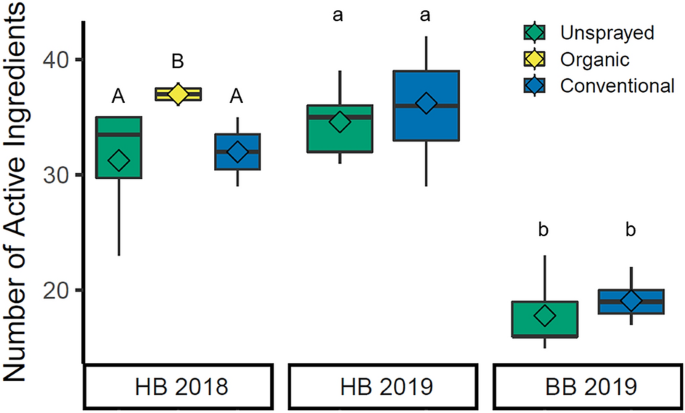
Over both years, 80 of the 259 screened pesticide active ingredients were detected in the pollen.
Bees are critical for crop pollination, but there is limited information on levels and sources of pesticide exposure in commercial agriculture. We collected pollen from foraging honey bees and bumble bees returning to colonies placed in blooming blueberry fields with different management...

www.nature.com
Glyphosate also seems to exert a significant toxic effect on neurotransmission and to induce oxidative stress, neuroinflammation and mitochondrial dysfunction, processes that lead to neuronal death due to autophagy, necrosis, or apoptosis, as well as the appearance of behavioral and motor disorders.
In line with this, there is evidence of the participation of Wnt signaling in various neurocognitive developmental disorders, such as autism [55,56]. Thus, the deregulation of this pathway by glyphosate in human cells in vitro could be related to a higher incidence of developmental and autism spectrum disorders in children whose mothers were exposed to pesticides [57,58,59], including glyphosate, during pregnancy [47].
[57]Evidence the U.S. autism epidemic initiated by acetaminophen (Tylenol) is aggravated by oral antibiotic amoxicillin/clavulanate (Augmentin) and now exponentially by herbicide glyphosate (Roundup)
Because certain hereditary diseases show autistic behavior, and autism often runs in families, researchers seek genes underlying the pathophysiology of autism, thus core behaviors. Other researchers argue environmental factors are decisive, citing compelling evidence of an autism epidemic in the...

pubmed.ncbi.nlm.nih.gov
Major depressive disorder (MDD) is predicted to become the second most common cause of disability in the near future. Exposure to glyphosate (Gly)-based herbicides has been linked to the onset of MDD. However, the underlying mechanisms remain unclear
Major depressive disorder (MDD) is predicted to become the second most common cause of disability in the near future. Exposure to glyphosate (Gly)-based herbicides has been linked to the onset of MDD. However, the underlying mechanisms remain unclear. The aim of this study was to investigate the...

annals-general-psychiatry.biomedcentral.com
These data demonstrate that exposure to pyrethroid pesticides increases the risk of being diagnosed with ADHD.
Attention-deficit hyperactivity disorder (ADHD) is estimated to affect 8–12% of school-age children worldwide. ADHD is a complex disorder with significant genetic contributions. However, no single gene has been linked to a significant percentage of ...

pmc.ncbi.nlm.nih.gov
Pesticides are widely used in the world for agriculture and industry. A lot of pesticide residues are observed in our air, soil, and water, which has been regarded as serious environmental contaminations. More and more researches begin to pay attention to the potential toxic effects of...

link.springer.com
Pesticides Exposure and Dopaminergic Neurodegeneration