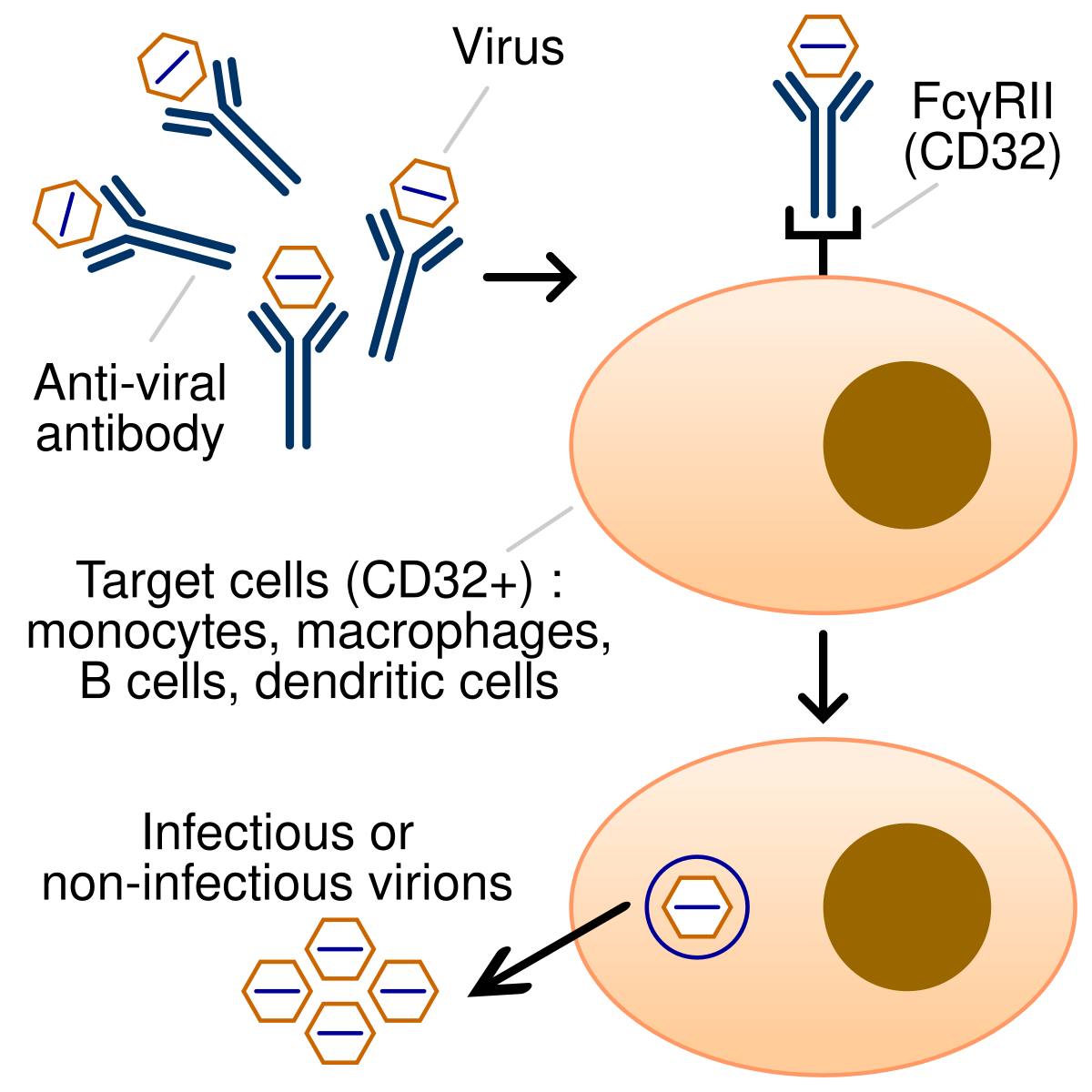
ADE may occur because of the non-neutralizing characteristic of the antibody, which binds viral epitopes other than those involved in host-cell attachment and entry. ADE may also happen because the antibodies are present at sub-neutralizing concentrations (yielding occupancies on viral epitopes below the threshold for neutralization).[5][6] In addition ADE can be induced when the strength of antibody-antigen interaction is below the certain threshold.[7][8] This phenomenon might lead to both increased virus infectivity and virulence. The viruses that can cause ADE frequently share some common features such as antigenic diversity, abilities to replicate and establish persistence in immune cells.[1] ADE can occur during the development of a primary or secondary viral infection, as well as after vaccination with a subsequent virus challenge.[1][9][10] It has been observed mainly with positive-strand RNA viruses. Among them are Flaviviruses such as Dengue virus,[11] Yellow fever virus, Zika virus,[12][13] Coronaviruses, including alpha- and betacoronaviruses,[14] Orthomyxoviruses such as influenza,[15] Retroviruses such as HIV,[16][17][18] and Orthopneumoviruses such as RSV.[19][20][21]


 )
)



 .
. 
